


The CNC machines, from Computer Numerical Control, have redefined the very landscape of precision machining, with accuracy unparalleled in the entire machine universe and, besides that, the most efficient and versatile in their deliveries. Therefore, ensuring one knows their options is paramount in trying to achieve the best results, be it a home hobbyist grinding metal or even an industrialist looking for reliable machinery for professional manufacturing. This guide is a complete look at the best CNC machines for hobbyists and professional use, focusing on key features, capabilities, and what to consider when choosing.
Introduction to CNC Metal Mills

CNC metal mills are machining tools that cut, shape, and engrave metals, guided by computer instructions and achieving accuracy through this machining process. In contrast to manual systems, CNC (Computer Numerical Control) mills operate based on a pre-programmed code, thereby automating operations with utmost consistency and accuracy.
Key Industries Using CNC Metal Mills
- Aerospace: High-precision components and aircraft parts
- Automotive: Engine components and custom parts
- Manufacturing: Complex designs and tight tolerances
What is a CNC Machine?
CNC is the acronym for Computer Numerical Control, which is a computer-programmed machine that automates the machining processes, such as cutting, milling, drilling, and setting up, with enhanced precision. The software preprograms these machines, determines the motion of the tools, and performs their actions with great accuracy.
Efficiency
Automated operations cut down production time
Reliability
Consistent results and fewer chances of human errors
Versatility
Ability to work on a variety of materials with clean work
Importance of CNC Milling in Metal Fabrication
CNC milling, with high precision and versatility, can turn a piece and be at home in metal fabrication. Whether for the utmost accuracy in shaping and cutting metal parts or those that must meet precise specifications, manufacturers rely on this method. It is efficient; it can handle intricate designs and produce minimal waste.
Overview of Different Types of CNC Mills
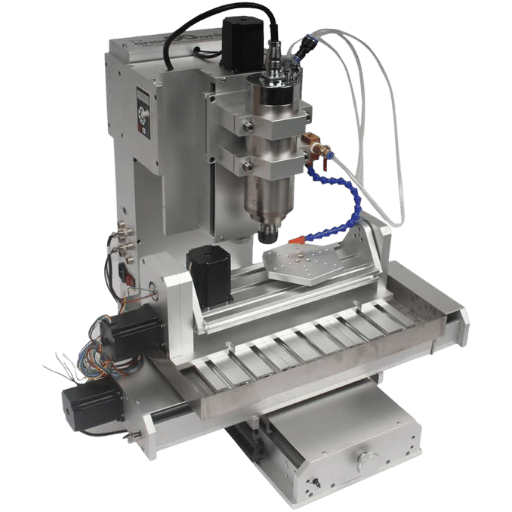
Vertical CNC Mills
These machines feature a vertically oriented spindle and are ideally suited for drilling and cutting operations.
Horizontal CNC Mills
A horizontal-axis spindle provides more complex and heavier workspaces.
3-Axis CNC Mills
These machines operate in three directions: X, Y, and Z, and perform a wide range of basic milling functions effectively.
5-Axis CNC Mills
In addition to the rotational axes, this type of mill can create complex geometries and execute intricate machining grooves.
Compact CNC Mills
These small and portable machines are ideal for prototype and very light manufacturing purposes.
Types of CNC Machines for Metal Milling
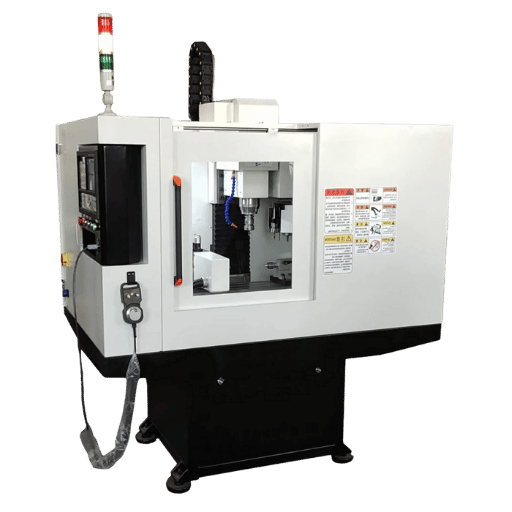
Desktop CNC Machines for Hobbyists
Desktop CNC machines fall into the category of small and inexpensive machines, designed to suit the scientist-hobbyist and small-scale manufacturers. These machines typically feature rigid frames and structures made of aluminum or steel, along with ergonomic interfaces that facilitate simple operation, even for beginners.
Key Specifications
- Spindle Speeds: 10,000 to 30,000 RPM
- Working Areas: 300mm x 180mm or more
- Materials: Wood, plastic, and soft metals
- Price Range: Starting as low as $500
Recent Advancements
- High-speed stepper motors for improved precision
- Intuitive touchscreen controls for user-friendly operation
- Expanded work area capacities for larger projects
- Enhanced CAD and CAM integration for design flexibility
Industrial CNC Milling Machines
Industrial CNC milling machines stand at the zenith of precision and performance in manufacturing. They can work across various materials, including metals, plastics, and composites, with tolerances set to ±0.0001 inch.
Performance Metrics
- ✓ Tolerances: ±0.0001 inches
- ✓ Spindle Speed: 30,000-50,000 RPM
- ✓ Multi-axis: 3-, 4-, and 5-axis configurations
- ✓ Automated Tool Changers (ATCs)
Technology Features
- ✓ IoT connectivity
- ✓ Predictive maintenance
- ✓ Remote monitoring
- ✓ Performance optimization
Market Projections
The global CNC milling machine market is projected to reach $128 billion by 2030, driven by technological innovation and increasing automation across industries.
Comparing Small CNC and Larger CNC Machines
Best Practices for CNC Metal Milling

Setting Up Your CNC Milling Machine
6-Step Setup Process
1Prepare the Workspace
Ensure the area around your CNC milling machine is clean and free of obstacles. Verify that all necessary tools and materials are readily accessible.
2Inspect the Machine
Conduct a thorough inspection of the machine, checking for loose components, wear, or damage. Confirm that essential parts, such as clamps and spindles, are secure and operational.
3Calibrate the Machine
Following the manufacturer’s instructions, set up the machine’s calibration. Such a process entails zeroing the axes and alignment for accuracy.
4Load the Material
Secure the material onto the machine bed, especially if a collet is to be used, to ensure the highest degree of precision. Double-check that the material is positioned in alignment with machining parameters.
5Verify Cutting Tools
Ensure that you use the right cutting tools, which are sharp and properly mounted. Verify the tool offsets to ensure consistency with the program instructions.
6Run a Trial Test
Simulating or dry-running will help ensure that the programmed tool path works as intended in software and keeps the machine free of errors during actual machining.
💡 Pro Tip
Using the above steps in order will help you in setting up your CNC milling machine more efficiently and lessen the chances of operational problems.
Tool Setting and Calibration Techniques
The setting and calibration of tools are required for accuracy in CNC milling operations. It generally begins with the selection of measuring instruments, such as touch probes, tool presetters, or laser measurement systems.
Touch Probes
- Detect position and dimensions with high accuracy
- Integrated into CNC machine systems
- Reduce setup time by up to 90%
- Enable real-time data transmission
Laser Measurement Systems
- Non-contact measurement capabilities
- Detect tool wear and breakage
- Real-time monitoring during operation
- Minimize workflow interruptions
⚠️ Impact of Poor Calibration
In dealing with improper tool calibration, dimensional and finishing errors can significantly impact productivity, potentially leading to tool breakage. To prevent improper tool calibration, modern CNC machines utilize automatic calibration cycles.
Enhancing Rigidity for Improved Results
In a machining process, rigidity is a crucial factor that significantly influences the quality level, encompassing precision, surface finish, and overall performance. Studies show that a 20% increase in stiffness causes vibration amplitudes to decrease by nearly 30%, which significantly improves dimensional accuracy and tool life.
Key Strategies for Enhanced Rigidity
- Dual-Contact Tool Holders: Minimize deflection under high loads
- Optimized Spindle Interface: Reduce runout to less than 1 micron
- Polymer Concrete Bases: Dampen vibration 10 times better than cast iron
- Pre-loaded Linear Guideways: Reduce backlash to zero and assure repeatable positioning
Cost Considerations for CNC Metal Mills

Affordability of Desktop CNC Machines
Desktop CNC machines have become increasingly accessible with advances in manufacturing technology and increased competition. They provide an excellent value for hobbyists, small businesses, and educational institutions.
Entry-Level
Perfect for hobbyists and beginners
Mid-Range
Enhanced precision and larger work areas
Professional
High-performance for small-batch manufacturing
💰 Cost-Saving Options
- Flexible financing plans – Spread costs over time
- Refurbished models – Quality machines at reduced prices
- Open-source CNC kits – Build your own system
- Lower energy consumption – Reduced operational costs
Budgeting for CNC Machine Maintenance
A well-planned budget for CNC machine maintenance will go a long way in ensuring smooth operations and minimizing unexpected downtimes. Maintenance costs should include funds toward scheduled preventive maintenance and possible emergency maintenance when planning for such forecasted expenditures.
Annual Maintenance Budget Rule
Allocate this percentage annually for maintenance-related expenses
Maintenance Cost Categories
Preventive Maintenance
- Regular inspections
- Lubrication
- Cleaning and calibration
- Wear part replacement
Consumables
- Cutting tools
- Belts and bearings
- Filters
- Coolants and lubricants
Labor Costs
- Skilled technician services
- Training and certification
- Emergency repair calls
- Outsourced maintenance
Technology Upgrades
- Monitoring software
- Predictive maintenance tools
- Condition-based sensors
- Data analytics platforms
Investment vs. Returns in CNC Milling
When determining investment in CNC milling, several crucial factors must be analyzed, including upfront costs and efficiency, as well as long-term returns. CNC milling machines generally require a substantial initial investment, but when put alongside efficiency gains, they have great value.
Initial Investment Range
- Entry-level: $50,000
- Mid-range: $100,000 – $250,000
- Advanced multi-axis: $500,000+
Efficiency Gains
- Automation: Up to 90% of processes
- Reduced labor costs
- Minimized human error
- Faster turnaround times
Key Performance Metrics
Advanced Techniques in CNC Milling
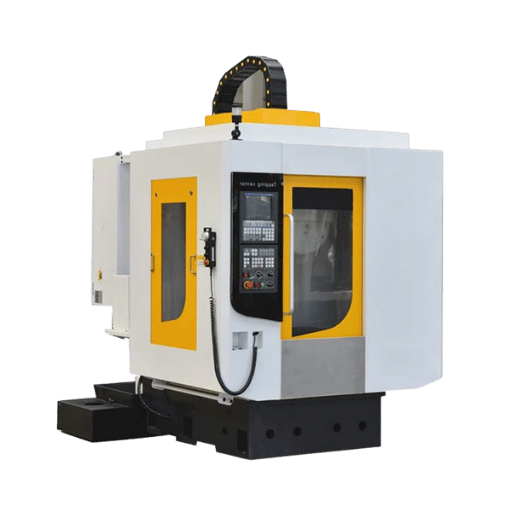
Using Probes for Precision Machining
Probes are highly advanced tools that are integrated into CNC milling machines to provide an additional layer of enhancement, either in precision, efficiency, or automation, in machining processes. These devices enable direct measurement and inspection of parts on the machine, thereby eliminating errors caused by human error.
Touch-Trigger Probes
- ✓ Sub-micron precision detection
- ✓ Reduce setup time by 90%
- ✓ Real-time data transmission
- ✓ Accurate workpiece alignment
Optical & Wireless Probes
- ✓ Streamlined operations
- ✓ Real-time data transmission
- ✓ Minimize equipment downtime
- ✓ Enhanced workflow efficiency
🎯 Industry Impact
In Aerospace manufacturing, probes enable first-part inspection and adaptive machining, therefore:
- 60% reduction in defect rates
- Improved production efficiency
- Consistent quality in finished parts
- Optimized machining processes
Thread Milling with CNC Machines
Thread milling is used in CNC machining to create various internal and external threads in high-precision applications. Conventional tapping involves a straight-through movement; thread milling, on the other hand, utilizes a rotating cutting tool with helical interpolation to achieve the desired thread geometry.
Advantages Over Traditional Tapping
- Flexibility: Single tool for multiple thread sizes
- Reliability: Less tool breakage risk
- Versatility: Works with exotic materials
- Efficiency: Up to 30% faster than conventional methods
Thread Types Supported
- UNC – Unified National Coarse
- UNF – Unified National Fine
- Metric – Standard metric threads
- Custom – Specialized thread profiles
🔧 Tool Enhancement Technologies
Advances in tool geometry and the use of state-of-the-art coatings such as titanium aluminum nitride (TiAlN) for longer tool life and lower operating costs make thread milling even more profitable.
Utilizing Control Software for Enhanced Performance
Control software optimizes CNC machining performance. Modern software systems provide accurate toolpath control, machining simulation, and cutting condition monitoring.
Efficiency Increase
Through advanced control software implementation
Scrap Reduction
Reduction in scrap rates with modern systems
🤖 AI and Machine Learning Features
- Adaptive Control: Dynamic parameter adjustment based on conditions
- Predictive Maintenance: Forecast equipment failures before they occur
- Process Optimization: Continuous improvement through data analysis
- Quality Assurance: Real-time monitoring and correction
Frequently Asked Questions (FAQs)
What is a CNC metal mill?
A CNC metal mill is a type of computer-controlled machine tool used to cut and shape metal parts with utmost precision. These machines employ a variety of milling procedures to create intricate shapes and components, making them indispensable in manufacturing and prototyping.
How does a desktop CNC milling machine work?
It features a computer controller that allows the milling tool to move along several axes. A spindle carries the tool, typically end mills, which rotate at very high RPM and cut material from a workpiece, allowing machining operations to proceed.
What are the advantages of using a Tormach CNC mill?
Tornach CNC mills are typically affordable and accessible, making them a favorite among hobbyists and small businesses. What makes them the best option for in-house machining projects is straightforward control software, a powerful spindle capability, and the ability to process a wide range of materials.
Can a CNC milling machine cut tougher materials?
Yes, many CNC milling machines, including 5-axis CNC models, are capable of cutting tougher materials such as 4340 steel. The choice of cutting tools, spindle speed, and feed rate is a crucial factor in achieving effective material removal while maintaining tool life and surface finish.
What is a 5-axis CNC, and what are its benefits?
A 5-axis CNC machine enables machining in five different directions simultaneously, providing greater flexibility and precision in creating complex geometries. This capability reduces the need for multiple setups and tool changes, ultimately reducing cycle times and enhancing productivity.
What is the significance of a touch probe in CNC machining?
In CNC machining, touch probes enhance accuracy by providing exact measurements and tool settings. Probes can be used to measure the workpiece and set reference points, ensuring that CNC machining proceeds accurately and efficiently.
How do I achieve a good surface finish on metal parts using CNC milling?
To achieve a good surface finish on metal parts, it is essential to select the proper cutting tools while also considering spindle speed, feed rates, and tooling techniques. Using flood coolant may also help to keep tool temperature down, thus improving the quality of the machined surface.
Reference Sources
- CNC – Invention Studio | Georgia Institute of Technology
This page from Georgia Tech provides information on various types of CNC mills and their applications, making it a reliable academic source. - CNC Mill | Sears think[box]
Hosted by Case Western Reserve University, this resource discusses CNC mills and their capabilities in producing high-quality metal and plastic parts.
Ready to Start Your CNC Journey?
The technology is just the thing to bring your metal milling projects to a new level-from compact desktop machines to high-performance industrial ones. Select a machine appropriate for your skill level, needs, and budget.

