


5 Axis CNC Machining Services: Precision and Innovation in Multi-Axis Machining
When advanced manufacturing technologies are discussed, few have been able to transform the industry irrevocably like 5-axis CNC machining. Truly a modern form of manufacturing, this process provides precision and flexibility unlike any other in machining, allowing manufacturers to pursue and attain the most complex geometries with extreme accuracy. It is a 5-axis CNC machine that leads the designing, manufacturing, and supply chain of complicated parts that require aerospace components, medical devices, or automotive parts for present-day engineering.
Introduction to 5 Axis CNC Machining
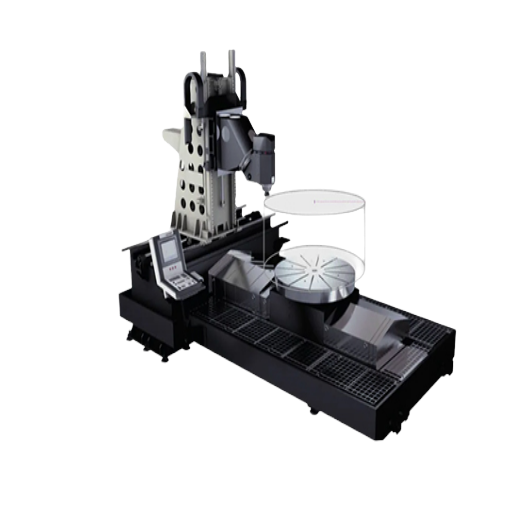
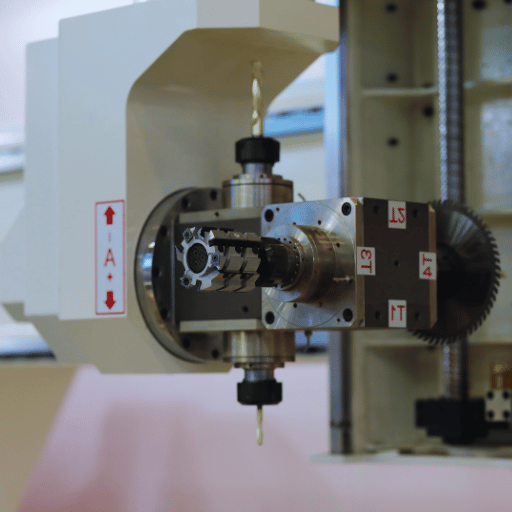
5-axis CNC machining is a highly complex manufacturing technology where a cutting tool or part moves simultaneously along five different axes. Whereas a traditional 3-axis system confines itself to the execution of machining in three linear axes, X, Y, and Z, the 5-axis machining provides additional degrees of freedom through rotation about two additional axes. In essence, the system caters to complex geometry, fine surface finishes, and high precision with minimal setup.
What is 5 Axis CNC Machining?
This type of machining is a very specific operation where the cutting tool moves in five directions simultaneously. With respect to the standard three linear axes (X, Y, and Z), rotational motion is added, particularly around the A-axis (rotate about the X-axis) and B-axis (rotate about the Y-axis). It is an option used in a handful of industries, such as aerospace, automotive, and healthcare, to make highly complex and precision parts.
Overview of CNC Machines and Their Evolution
Computer Numerical Control machines are developed for manufacturing, whereas design was once the selection of precision in the production process with material variability. CNCs were introduced in mid-20th-century factories, with early CNCs having programs stored on punched tape. On the path of progress, each increase in computing power and digital technology was used by CNC systems to become more sophisticated in dealing with complex geometries and performing high-speed operations.
💡 Why Multi-Axis Machining Matters
Multi-axis machining is a crucial aspect of modern manufacturing because it allows for large-scale production of complex and precise components. By working on parts along multiple axes simultaneously, these machines help avoid part repositioning and lessen the chances of errors while saving time and not compromising manufacturing accuracy and repeatability.
Key Benefits of 5 Axis CNC Machining Over Traditional Methods
1
Increased Precision and Tolerance
Provides unprecedented precision as the tool can move simultaneously across five different axes, limiting manual intervention, thus leading to fewer human errors and guaranteeing consistent accuracy over complex components.
2
Reduction in Setup Time and Costs
Complex components need only be machined in one operation, cutting down on setup changes; no time is wasted on realignment of the component; thus, labor costs are reduced with improved operational throughput.
3
Creating Complex Geometries
Means precise control of tool movement to create complicated patterns and fine features that would be very hard or impossible otherwise with conventional machining methods.
Common Materials Used in 5 Axis CNC Machining
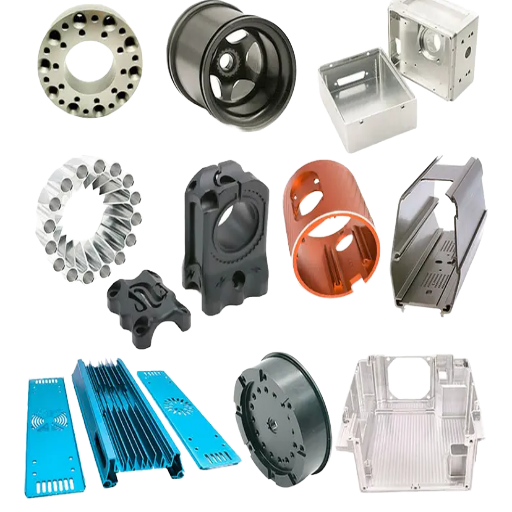
Metals: The Foundation of Precision Manufacturing
Plastics and Composites
Industry Applications and Success Stories
🤖 Automation and AI Advancements
Automation and AI further bring transformation to the CNC machining lines with respect to efficiency, precision, and adaptability. Automated systems offer streamlined workflows by lessening manual interventions, resulting in speedy production and minimal errors. Tools empowered with AI perform remote monitoring, predictive maintenance, and adaptive control, enabling machines to fine-tune performance and predict maintenance issues.
🌱 Sustainable Practices
Sustainability in CNC machining encompasses energy-efficient technologies, waste reduction avenues, and the adoption of renewable resources. Modern-day CNC machines use less energy as they employ operational protocols concerning power optimization. The recycling and repurposing of scrap materials thus come in handy in cutting down the effect on the environment, and simultaneously, keeping the costs low.
🚀 Emerging Technologies
Emerging technologies such as additive manufacturing (3D printing), AI, and IoT are transforming industries for enhanced efficiency, accuracy, and sustainability. These technologies help streamline operations, reduce energy consumption, and slash costs with minimal environmental impact.
Future Trends in CNC Machining
✈️ Aerospace Innovation
- Lightweight Materials: Carbon fibers and Fiberglass help to make lighter, less fuel-consuming planes.
- Thermoplastics: PEEK material gives durability under extreme temperature conditions.
- Thermal-Control Alloys: Kovar and Invar ensure exact stability for precision instruments.
- Protective Solutions: Kevlar for ballistic protection and wiring
🏥Medical Excellence In Medical Devices
- Material Selection: Biocompatible materials are necessary to protect the patient’s life.
- Precision Engineering: By CNC machining, prototypes are accurately manufactured.
- Regulatory Compliance: We complied with ISO 13485.
- Iterative Development: Testing is always carried out, making design faults fewer and fewer with new developments.
🚗 Automotive Manufacturing
Making of automotive parts includes manufacturing components as per industry standards for performance, durability, and safety. By applying modern technologies such as automated assembly lines and 3-D modeling software, further enhancement of efficiency and accuracy in production has been made.
Cost Considerations in 5 Axis CNC Machining
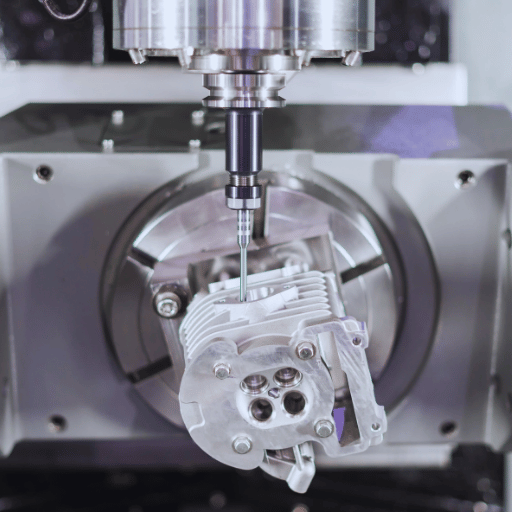
Analyzing CNC Machining Costs
Several primary factors render CNC machining costs: material selection, machine time, design complexity, etc. Materials such as aluminum or steel usually fluctuate in prices owing to their availability or machinability. Machine time determines cost; the more complicated the design is, the longer it takes to process the item with tight tolerances.
Factors Affecting Pricing
💰 Material Selection
Costs vary on the basis of the material used, availability, quality, and machinability (aluminum being more expensive than steel).
⚙️ Design Complexity
The intricate designs that are held to tight tolerances take more machining time, thus raising their cost.
📦 Batch Size
Higher production runs spread the cost over a larger number of units, thereby lowering the cost per unit
🔧 Setup Charges
Machine and Tool Set-Up is a charge related to unique designs
⏰ Lead Time
Faster production always means additional charges
🛠️ Post-Processing
Polishing, finishing, or coating processes add to total expenses
Cost-Benefit Analysis of 5 Axis Services
✅ Enhanced Precision
Absolute accuracy drags out dimensional errors; hence, a factor of part consistency comes into play.
⚡ Reduced Setup Time
The set-up of workpieces is eliminated since repositioning multiple times is unnecessary.
🎯 Fine Surface Finish
The continued-motion method is used to cut mush smoother and lessen secondary processes.
💎 Complex Shape Capability
Five axes of movement enable intricate designs impossible with traditional machines
How to Choose a 5 Axis CNC Machining Service Provider
🔍 Key Evaluation Criteria
1
Technical Expertise
Assess the ability to handle complex geometries and custom specifications
2
Equipment Quality
Test if the plant is equipped with advanced, high-quality 5-axis CNC machining centers
3
Quality Assurance
If any, check for certifications and inspection procedures, ensuring consistent results
4
Industry Experience
Take into account lead-time or scale-up time and industry-specific expertise
🎯 Precision and Tolerance Standards
Tolerance standards are essentially applied based on the need for precision and the usefulness of the manufactured components. Below is a brief on these aspects:
- Following the generic standards like ISO 2768, ASME, etc.
- Sampling of parts and reviewing inspection reports, certificates, etc.
- Use of calibrated measuring equipment along with documented quality control procedures
- Ability to fulfill specific tolerance criteria for elaborate applications
📞 Customer Interaction and Communication
Transparent and reliable customer support facilitates every other collaboration and subsequent dispute during the project. Important communications forge awareness of expectations, implications of technical requirements, and operational updates. Good communication adds importance and value to trust-creating exercises that lead to long-term relationships between companies.
Frequently Asked Questions (FAQs)
Q: What is 5-axis machining, and how does it differ from traditional machining?
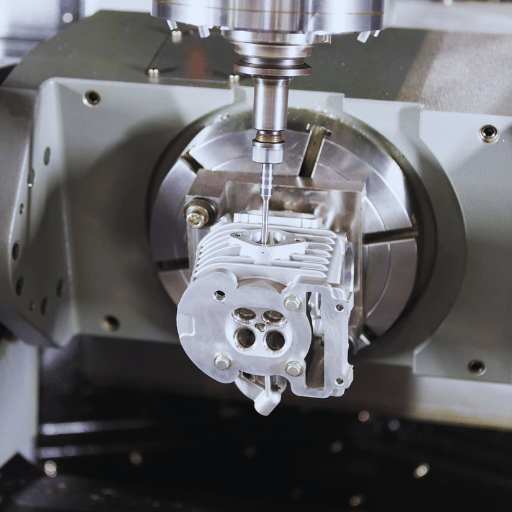
A: The 5-axis CNC machining refers to the process of completing machining on a CNC machine that can move a workpiece in five different directions simultaneously. This offers the possibility to machine a very difficult piece having a very complicated geometry that one might either struggle to achieve or never be able to achieve with the traditional 3-axis equipment.
Q: What benefits can be gained in precision machining by using a 5-axis CNC machine?
A: This 5-axis CNC machining process has various advantages that include being able to machine with very high precision and accuracy, and without having to go through multiple setups, thereby saving on the machining time and surface finish time of the workpiece.
Q: What materials can 5-axis CNC machining services work with?
A: 5-axis CNC machining services can handle all kinds of materials that include metals, plastics, or composites. This versatility, in turn, feeds into the possibility for 5-axis CNC machining to fabricate custom CNC parts for unique manufacturing requirements.
Q: How does 5-axis machining enable the manufacturing of parts with complex geometric shapes?
A: With 5-axis machining, the cutting tool can approach the workpiece from several angles all in one setup, which allows for the manufacturing of complex The main advantage of manufacturing from one setup. This minimizes workpiece repositioning and improves potential precision and tight tolerances in the production of machine parts.
Q: What are the typical lead times for CNC machining projects?
A: Several factors influence lead times to complete CNC machining projects. These include the complexity of the part, the materials used, and the machine shop workload at any given time. However, with efficient CNC rapid prototyping methods and machining, projects can have a rather fast turnaround.
Q: What should I look at when deciding on a 5-axis CNC machining service?
A: While selecting a 5-axis CNC machining service, there are considerations, such as machining services available, the level of precision needed for your job, materials available, and the provider’s previous experience with complex parts and intricate geometries.
Q: Can we use 5-axis CNC machining for both prototype and production parts?
A: Sure, the 5-axis CNC machine can be used perfectly well for prototypes and production parts. The level of precision and operational efficiency inherent in the CNC system enhances its usability in producing high-quality parts in one setup with no compromise, all the way from the initial prototype stage to production runs.
Q: What is the role of a machinist in the 5-axis CNC machining process?
A: A machinist sets the CNC program, specifies tool selection, monitors all operations, and ensures that the parts meet the specified requirements and tolerances.
Q: How does the surface finish of parts produced by a 5-axis machine compare to those made by other machining methods?
A: The surface finish of the parts by a 5-axis machine, due to its capability to approach the workpiece from several angles, is generally better than that of traditional machining, thereby giving smoother finishing and requiring less finishing.
Reference Sources
- Multi-Axis Machining Project Development
A resource describing the development of five-axis CNC mill parts and their production.
Click to continue reading - Assessment of Geometric Accuracy of a 5-Axis CNC Machine
This research investigates 5-axis CNC machines for their geometric accuracy in machining aircraft transmission housings.
Read more here. - Machining

