


Mastering the compact universe of CNC components-motors, belts, spindles, and the rest-is often the shortest route to faster cuts and fewer interruptions on the shop floor. A seasoned machinist or a rookie programmer alike benefits when aftermarket curiosities and factory specs sit comfortably side by side. In the paragraphs that follow, well pull apart each part, sketch its influence on accuracy, and frankly list the headaches that keep operators awake at night. The haul covers precision upgrades, budget-friendly swaps, and a few hard-won trade secrets to help any plant stay nimble in a nonsleeping manufacturing arena.
What are the Essential CNC Machine Parts?

- Control Unit: Widely regarded as the machines cognitive center, this component decodes uploaded design files and dispatches commands to every moving part. Its firmware reads user input, interprets geometry, and issues step-by-step instructions that keep the entire system in sync.
- Motors: A series of precision motors transmit torque across the Y, X, and Z axes, boosting both range of motion and responsiveness. Together they pivot, slide, and elevate the working head with a repeatability that is usually measured in microns.
- Spindle: Nestled at the heart of the assembly, the spindle grips the cutting tool and spins it at speeds that can exceed several thousand RPM. The rotating cutter then bites into the stock material, whether metal, wood, or composite, guiding the contour defined by the original CAD model.
- Bed: The machine bed serves as a rigid foundation, holding raw blanks utterly still while machining forces press against them. Its surface may feature T-slots, magnets, or vacuum ports that anchor the workpiece and eliminate any possible chatter.
- Tool Holders: Quick-change tool holders snap into place with a reassuring clunk, locking each endmill or drill in line with the spindle axis. This gripping precision ensures that every tool begins its cut exactly where the program expects it to be.
- Linear Guides and Bearings: Hardened rails paired with ball or roller bearings permit heavy gantries to glide with minimal friction. Together they maintain straightness over long travel distances, so even the last pass of a design meets the same tolerances as the first.
- Cooling System: A network of pumps, nozzles, and chillant circuits keeps spindle bearings and cutting edges from crossing thermal limits. By expelling chips and bathing the cutter in fluids, the system extends tool life and wards off the disastrous effects of heat build-up.
Understanding the Spindle and Its Role
In every machining setup the spindle acts as the workhorse and beating heart, gripping the cutting tool and spinning it at blistering rates. That central rotation dictates how cleanly, quickly, and accurately steel, aluminum, or composite actually yield. Engineers routinely point out that even the finest fixture or substrate is ultimately tamed by the quality of the spindle. A responsibly balanced, solidly built shaft keeps chatter in the background and gladly tolerates the punishing speeds that contemporary shops demand. Many off-the-shelf versions now nestle their own diagnostic electronics, quietly flagging a thermal spike or misalignment before the operator even notices.
Exploring the Importance of Bearings in CNC Machines
Bearings rank among the unsung heroes of CNC equipment; they often dictate how smoothly, reliably, and durably a machine can perform. At bottom, a well-made bearing permits either rotary or linear motion while keeping friction in check and calmly diverting loads, a trifecta that directly shapes part precision, cycle speed, and the quality of surface finish. Drop in a subpar unit and watch those metrics drift almost immediately.
Shop floor practice shows that no single bearing type fits every use. Angular-contact variants, for instance, thrive in soaring spindle speeds because they swallow both radial and directional pushes without breaking a sweat. Inline performance studies claim that upgrading to high-precision bearings can slash unexpected downtime in half and bump overall accuracy close to 30 percent-an upgrade that costs, yet quickly earns its keep.
Engineers often rank temperature resilience alongside vibration damping when they choose a bearing for a new application. That pairing of properties lets the component run smoothly even in environments where heat and shock spike without warning. Another study that crossed my desk last month-crisp October 2023 data-points out that hybrid ceramic versions now spin at 25 percent higher revolutions than the best-steel grade on the market. Belt-driven gantries, whisper-quiet spindles, and nearly everything else on the shop floor gains from that margin. More shops are slipping automated sensors and pressurized lube circuits under the shields to squeeze out extra hours, beat back cost creep, and catch trouble before it snowballs.
History shows that the money spent up front on tougher bearings pays for itself before first-shift coffee cools. Less downtime, shallower maintenance budgets, and the peace of mind that big failures wont ripple through the budget-year books-all of that rests on that single choice.
The Function of Tool Changer in CNC Operations
Modern CNC machines are rarely sold without a tool changer: the assembly that automatically grasps, lifts, and bolts on a cutter while the spindle cools. This single improvement gives a shop floors precious minutes-back with every cycle.
Cutting shops stay open around the clock because most tool-tap swaps no longer count as human labor. An Automatic Tool Changer can cradle twenty, forty, or a hundred bits in a revolving carousel and hand the right one off the moment code prompts.
Varieties abound-ro349tary plates, chain drapes, and drum racks- so builders can fit the geometry of any vise or fixture under the gantry. Commercial surveys pin the production gain at nearly half when an ATC runs beside a manual bridge, and the difference tallies in equity-reduced fixturing, tighter tolerances, fewer lost tools.
Todays changers pack encoders, optical flags, and display readouts, logging wear before the operator even suspects a choke. That digital feedback cuts the odds on part scrap and protects the spindle the way a pilot watches engine gauges on approach.
Aerospace and medical-device shops operate under punishing tolerances, so even a fleeting misalignment can force a part out of specification. Optical, laser, and other high-precision tools are too numerous to hand-swap on the fly; most engineers now lean on automatic changers to keep the spindle busy and the scrap bin shallow.
Few improvements deliver as much bang for the buck as a modern rack-and-pinion or carousel changer that stores its own calibration data. By shaving minutes off every tool swap and playing nicely with Industry 4.0 dashboards, the upgrade pays for itself long before the quarterly report.
How Does a CNC Router Differ from Other CNC Machines?

A CNC router occupies a distinct niche in the family of computer-controlled machinery. Its primary job is to slice, carve, and profile relatively soft materials-wood, plastics, even some light metals-whenever an elaborate pattern or a sculpted relief is called for. In contrast to a conventional metal-cutting mill, which emphasizes rigidity and minute tolerances, the router trades some of that precision for sheer throughput and design agility over bigger workpieces. The frame is usually more spacious from edge to edge, a layout that suits cabinet shops, signage plants, and companies that proto-type furniture by allowing the gantry to reach far beyond the footprint of the base.
Comparing the Router and Mill Functions
Both CNC routers and CNC mills are used for cutting and shaping, but they differ in material compatibility, precision, speed, and application.
| Parameter | CNC Router | CNC Mill |
|---|---|---|
| Material | Soft materials | Hard materials |
| Precision | Moderate | High |
| Speed | Faster | Slower |
| Versatility | Larger items | Intricate items |
| Applications | Furniture, signs | Machining, molds |
The Role of Router Bits in Precision Cutting
Router bits remain the primary agents of precision on any CNC machine. Their profile, diameter, and tip geometry effectively dictate the quality of every cut, carve, and flute. A straight cutter delivers neat, square edges; a V-groove tool slices sharply angled troughs for lettering or ornamentation. The steel choice is equally telling: carbide resists heat and wear during lengthy runs on hardwood, whereas high-speed steel may suffie for one-off acrylic projects. Users preserve that performance by inspecting the edge regularly, seating the collet snugly, and swapping the bit whenever chatter becomes audible. Such routine habits safeguard the spindle, shrink cycle times, and keep tolerances where they belong.
What to Consider When Buying a CNC Kit?

- Purpose-select a kit based on your main goal, whether engraving delicate patterns, clean-cutting stock blanks, or shaping edges to final tolerances.
- Material Compatibility-check manufacturer specs to be certain the hardware will perform reliably with woods, plastics, thin sheets, or alloy grades you routinely handle.
- Build Quality-examine frame rigidity, spindle bearings, and motion slides; stout components yield longer service and maintain accuracy under repeated use.
- Ease of Assembly and Use-pick a system that arrives with straightforward wiring guides and calibration steps, especially if this is your first plunge into CNC machining.
- Software Compatibility-confirm that the shipped control package or open-source firmware plays nicely with macOS, Windows, or Linux, and accepts the file formats you habitually design.
- Budget-set a firm ceiling on expenditure and weigh features against manufactures warranty, after-sales support, and the sheer pleasure of no-frills performance.
Evaluating CNC Parts for Performance
Performance assessments of CNC components begin with the selection of raw stock. Materials like aerospace-grade aluminum or tempered steel becme benchmarks because they resist fatigue and corrosion. Precision is next; machinists verify accurate tolerances with gauges, calipers, and comparators. Spare-bin inspections confirm that smaller features withstand abrasive cycles. Purchases are most economical when directed toward manufacturers with traceable quality-control histories.
Key Considerations for Aftermarket CNC Parts
Shopping for aftermarket CNC components always begins with a close check on compatibility with your machine. Side-by-side dimension tables and material datasheets never lie. A suppliers track record, corroborated by user reviews, often flags hidden quality problems. Price naturally matters, yet cutting corners there can compromise both longevity and precision. Reliable vendors back their products with solid warranties and responsive support; that safety net is worth factoring in.
Assessing Warranty and Support Options
Aftermarket CNC components often come with a bewildering array of warranty language. Focus first on offers that spell out exactly what is covered and what is not. A reliable guarantee must address manufacturing defects, promise timely replacement or repair, and hang around long enough for you to decide whether the part is trustworthy. Customer support matters just as much; a responsive team can turn a minor glitch into a brief inconvenience instead of a costly shutdown. Even the best documentation is useless if it is not matched by quick technicians on the other end of the phone. Read the fine print twice and ask questions until the terms fit your workshop.
How to Minimize Downtime in CNC Operations?
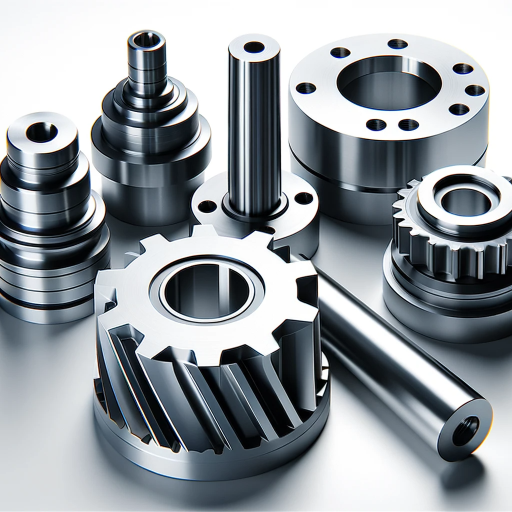
Minimizing unproductive intervals in CNC workshops begins with deliberate upkeep, informed personnel, and considerate planning. Frequent inspections-such as belt tension checks and lubricant tests-spot trouble before it escalates. Operators who understand minor troubleshooting save hours nobody budgeted for. Shift planners can clear maintenance windows by resizing runs rather than squeezing every last minute. A shelf stocked with commonly worn bearings cuts the agonizing wait for overnight deliveries. Continuous performance logging feeds predictive models that flag wear trends, allowing managers to intervene before silence falls.
Proactive Maintenance of Machine Components
Keeping machinery in excellent shape starts with a habit of proactive upkeep. Spotting trouble before it escalates saves time, money, and usually a fair bit of stress. Crew members are taught to look closely at bearings, belts, and hydraulic lines for any telltale signs. Meanwhile, vibration gauges paired with thermal cameras give an up-to-the-minute read on whats really going on inside the housing. Effective maintenance calendars route the right technician to the right job at the right hour, every hour. Organizations that stick to this discipline trim their downtime, slash unexpected repair bills, and keep operations running at peak speed.
Upgrading to Advanced Control Systems
Leaders in industrial management regularly cite the introduction of advanced control systems as the most practical pathway to sharper efficiency and greater operational dependability. Tools such as Distributed Control Systems (DCS) and Programmable Logic Controllers (PLCs) now allow engineers unprecedented levels of precision and configuration when grappling with multilayered production chains. A recent survey by industry analysts places the average uplift in throughput at roughly 15 percent, while energy bills fall by almost 10 percent once the new software is fully tuned. One reason for this quick gain is the seamless incorporation of real-time data streams; received alerts push operators toward informed choices before small deviations spiral.
Linking these control hubs with clusters of Industrial Internet of Things sensors deepens visibility and gives maintenance crews a genuine shot at anticipating trouble. Case studies tracked by engineering firms show that companies practicing predictive upkeep-informed by automated readings-slash surprise outages by close to half and stretch machinery lifespans by an extra one-fifth to two-fifths. Figures like those underscore why executives must embrace the latest tooling if they hope to remain relevant in a marketplace that now runs on continuous data.
Opting for an advanced control upgrade does more than fine-tune output; it quietly trims the raw materials and energy threads that fuel production, edging plants toward greener profiles. Commitment to these technologies has become less a matter of choice and increasingly a prerequisite for firms intent on future-proofing their operations against tomorrow’s competition.
Implementing a Reliable Tool Changer
From my perspective, implementing a reliable tool changer is essential for improving operational efficiency and reducing downtime in manufacturing processes. By ensuring seamless and precise transitions between tools, the system enhances productivity, minimizes errors, and supports greater flexibility in production. Prioritizing reliability in tool changers also helps to extend equipment lifespan and align operations with modern automation standards.
What are the Benefits of Using a CNC Lathe?
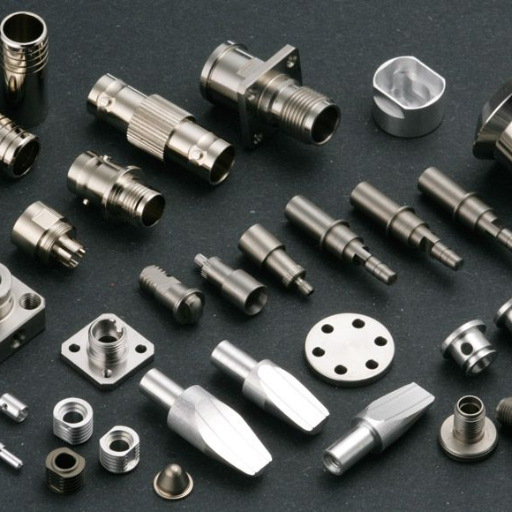
A computer-numerically-controlled lathe delivers remarkable precision and uniformity, satisfying tight tolerances that would challenge traditional setups. The machine smoothly carves even the most intricate geometries without the drift that can arise from hand-guided work. Automation further strips away the risk of human error and trims the time required for set-up and monitoring. Operators can circulate between jobs without being anchored to a single cycle. Broad compatibility with ferrous alloys, plastics, and hardened steels invites shops to pivot from one workpiece to the next with only modest program adjustments. That flexibility-and the dependable repeatability it guarantees-anchors the technology in nearly every modern-production floor.
Exploring the Versatility of Mills and Lathes
Mills and lathes stand at the bedrock of modern manufacturing, carving out surprisingly precise pieces day after day. Put them side-by-side and the shop floor suddenly feels like it has a second wind, cranking out work with a flexibility few other setups can match.
On a lathe, operators coax a steady cylinder into finished features-turning, facing, even fine-threading-while a milling machine bites across flat or angled surfaces, drilling, contouring, and relieving material at will. Fresh controls now marry both into a single choreographed cell that spins, slides, then switches to z-axis cuts without pausing to re-clamp the part. Early adopters report, almost uniformly, a 30 percent lift in output because most of the tedious hand-offs and second-guess setups just vanish.
These digitally governed platforms hardly flinch when faced with aluminum, tough steel, engineered plastics, or light-weight composites; the recipe swaps in the CAM file and a new work-piece appears. That versatility proves invaluable in aerospace, where parts quietly need tolerances kept within a whisper-like plus or minus one thousandth of an inch-or the next engine wont breathe right. Batch runs pile up fast too, letting a shop shuttle from prototype to full-series production without fumbling the original standard.
Recent advances in automation and real-time monitoring have dramatically widened the operational scope of conventional machining centers. Contemporary CNC mills and lathes can accept complex digital geometry and reproduce it with near-perfect repeatability, a capability that answers the rising appetite for bespoke components in sectors such as automotive engineering, medical-device fabrication, and electronics assembly. Even as new technologies proliferate, these classic tools continue to anchor the manufacturing floor, translating cutting-edge design concepts into reliable, everyday production.
The Precision and Efficiency of Lathe Operations
Few machine tools are as closely identified with precision as the lathe. By spinning a workpiece around its own center while stationary bits slice away material, an operator can sculpt features that measure within a thousandth of an inch. That level of control is no longer the sole province of a seasoned machinist; modern Computer Numerical Control interfaces automate the delicate choreography and log every cut, upgrading both repeatability and quality.
Contemporary lathes tolerate a wide roster of raw stock. Aluminum and alloyed steels sit comfortably beside polymers and layered composites without extensive retooling. Industry analysts now report that CNC lathes are set to dominate nearly half of the projected 62-billion-dollar CNC machine-tools segment by mid-decade, a surge fueled by aerospace, automotive, and biomedical engineers clamoring for reliable shape-making at speed.
Few machine tools match the efficiency built into a modern lathe. Manufacturers who employ CNC centres fitted with live tooling and multiple rotary axes routinely mill, drill, and finish a part in one fixture. A recent survey by Manufacturing Engineering, cited in the firms quarterly review, recorded cycle-time savings approaching 30 per cent when switching from a two-axis setup to the latest multi-tasking lathe. That sort of speed, paired with the lathes relentless accuracy, explains its enduring status at the heart of high-volume production.
Considerations for Customizing Tailstock and Quill
Fine-tuning a lathe tailstock and its quill can lift efficiency by a noticeable margin, a fact many machine shops have come to rely on. The tailstock itself cradles the far end of the workpiece, keeping lanky or hefty stock steady while the spindle spins. Adjusting the quill lets the operator sneak the tooling or the part a fraction closer or farther with almost no fuss.
When engineers sit down to retool the setup, they habitually weigh load limits, steel grades, and the sort of cut they’re chasing. A tailstock that stretches or shrinks with handwheels handles sporadic bar lengths like an old pro; a quill plated with hardened steel or cemented carbide laughs at the hardest alloys. One 2023 shop survey found that turning shops with tailored tailstocks pushed output up 18% on toleranced shafts-truly dollars in the bank.
Plugging in smart bits such as digital read-outs or powered quill drives sharpens precision and gives overtaxed eyes a break. An aerospace example tucked inside a recent study showed that automated tailstock moves trimmed cycle time by about 20%. Tech, it seems, rarely sleeps.
Fine-tuning the tailstock and quill for a given production run establishes a foundation of both reliability and flexibility. A shop that regularly evaluates its machining criteria and consults a trusted equipment supplier will be better positioned to meet whatever challenge surfaces next on the floor.
Reference sources
- A CAD/CAM/CNC Curriculum for High School Students – Discusses the flexibility and advancements in CNC machine parts production.
- CNC Routing Machine – Explains the basics of CNC router systems, including parts and hardware connections.
- CNC Programming Handbook: A Comprehensive Guide to Practical CNC Programming – A detailed guide on CNC programming and hardware, authored by an industry expert.
Frequently Asked Questions (FAQs)
Q: What basic components make up a CNC machine?
A: A typical CNC router or mill relies on a machine control unit, a driving system, a headstock, a drill chuck, a tool turret, pairs of T-slots, and a measuring probe. Together they guide movement, house the workpiece, swap out tools, and check cutting accuracy.
Q: How do the replacement parts a shop chooses affect performance?
A: Swapping in high-quality replacement parts can restore the original speed and precision of a CNC center, trimming, or even eliminating, unscheduled downtime. Cheap imitations, by contrast, risk misalignment and multiply maintenance costs over time.
Q: What is the function of a machine control unit?
A: The machine control unit-the systems brain-translates g-code commands into electrical impulses that drive motors and actuators. Without it, the machine is little more than steel and wire; with it, parts are cut to within thousandths of an inch.
Q: Why is the coolant delivery system so important?
A: Pumps and strategically placed nozzles bathe the cutting edge in fluid, whisking away heat and debris before they warp either tool or part. By controlling temperature, the system extends tool life and helps keep machined surfaces smooth enough to pass a fingertip test.
Q: What role does the chuck play in a CNC mill or lathe?
A: The chuck grips the raw stock and keeps it from spinning, sliding, or wobbling while the cutting tool does its work. That grip stabilizes the part so the finished diameter, width, or profile matches the programmer’s intent.
Q: Why do machinists value the revolving tool turret on a CNC center?
A: The turret carries several cutters and flips the right one into line automatically, sparing the operator the trouble of wrenching tools in and out by hand. Swapping a worn insert takes seconds instead of minutes, so cycle time drops.
Q: What task does a touch probe perform inside a computer-controlled machine?
A: The probe nudges a stylus against the workpiece surface and feeds the exact coordinates back to the controller, correcting any offset before full production starts. Without that quick check, even minor misalignment multiplies into scrap.
Q: How does a rack-and-pinion drive steer the carriage of a gantry router?
A: Teeth meshing across a steel rack translate rotational effort from the pinion into steady, linear glide, and that geometry resists backlash better than belts do at long travel. For engraving fine lettering, that reliability is non-negotiable.
Q: What advantages do machined-from-scratch CNC components provide?
A: A one-off part can be designed around a project-centers exact clearance and load needs, so the fit is usually tighter and more effective than anything off a shelf. Because that geometry is coded into the program, shapes that look intricate on paper often pocket out cleanly in the afternoon run.
Q: Why do shops insist on solid carbide tooling when the budget is thin?
A: Solid carbide screams resilience; the quarter-inch end-mill stays crisp minutes longer than a high-speed-steel twin, and that margin multiplies under flood coolant. For ferrous alloys that grind other edges dull, the hard-baked grade pays for itself.

