


Silver, renowned for its brightness and versatility, has enchanted technicians, jewelers, and engineers for ages. Among the physical characteristics that pique this curiosity is the property of density, which plays a significant role in various industries, from the creation of beautiful jewelry to the high technology of experimental advances. This thorough guide presents a lucid concept to the reader about the density of silver, its measurement methods, and its practical applications.
Introduction to Density and Silver

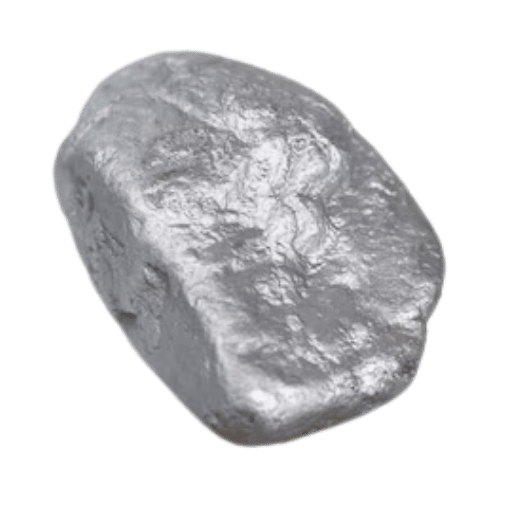
Specific density, also known as density, gives an account of the mass contained within a given volume of the substance. It defines one basic property, the compactness of silver, and its density according to its size. With a density of about 10.49 grams per cubic centimeter at room temperature, silver is relatively denser compared to gold and other precious metals.
Why Density Matters
- Directly influences silver’s behavior in manufacturing processes
- Affects durability in jewelry applications
- Critical for electrical conductivity applications
- Essential for thermal management systems
Importance of Understanding Density
Density is a crucial property that enables understanding of how a material behaves in various environments. The strength and durability of materials in construction and manufacturing, as well as their technology and performance, depend on density. By knowing the density of a particular material, an expert will be in a position to:
- Optimize designs for specific applications
- Ensure safety in structural applications
- Achieve efficient resource utilization
- Predict material performance in various environments
Connection Between Density and Purity
The density of a material is inherently linked to its purity, particularly when referring to metals like silver. The density of pure silver is about 10.49 g/cm³ at room temperature. When other substances, such as copper or zinc, are blended in, the density will vary depending on the relative densities of the blended substances.
Example: Sterling silver, an alloy containing 92.5% silver and 7.5% copper, is slightly less dense than pure silver because copper has a density of 8.96 g/cm³, which is lower than that of silver.
What is Density?

Definition of Density
Density is a fundamental physical property of matter, defined as the mass per unit volume of a substance. Mathematically, it is expressed as:
The standard SI unit for density is kilograms per cubic meter (kg/m³). However, other units, such as grams per cubic centimeter (g/cm³), are also commonly used, particularly in laboratory settings when measuring fine silver.
Relative Density Explained
Relative density, also referred to as specific gravity, is a dimensionless quantity that compares the density of a substance to the density of a reference substance, typically water for liquids and solids.
Key Point: If a material has a relative density of 2, it means the material is twice as dense as the reference substance.
Properties of Silver

Characteristics of Pure Silver
Pure silver, known as fine silver or 99.9% silver, is a precious metal with distinct physical and chemical properties:
Physical Properties
- Density: 10.49 g/cm³
- Melting point: 961.8°C (1,763.24°F)
- Highest electrical conductivity of any metal
- Highest thermal conductivity of any metal
Unique Features
- Lustrous white metallic appearance
- Excellent malleability and ductility
- Reflects up to 95% of visible light
- Antimicrobial properties
Comparing Silver Density with Other Metals
| Metal | Density (g/cm³) | Key Notes |
|---|---|---|
| Silver | 10.49 | High conductivity |
| Gold | 19.32 | Twice silver’s density |
| Copper | 8.96 | Common in alloys |
| Aluminum | 2.70 | Lightweight |
| Platinum | 21.45 | Heaviest precious metal |
How to Measure the Density of Silver

Methods for Measuring Density
The density of silver can be measured using the fundamental formula:
Step-by-Step Measurement Process
1. Measuring Mass
The mass of the silver sample should be determined in units of grams (g) using a high-precision digital scale. The instrument should be well-calibrated for accuracy.
2. Determining Volume
- Regular Shapes: Depending on the standard geometric figure, such as a cube or a sphere, calculate the volume using the corresponding mathematical formula.
- Irregular Shapes: Find volume by the water displacement method in a graduated cylinder.
3. Calculate Density
Convert mass to volume to obtain density, typically expressed as grams per cubic centimeter (g/cm³).
Using a Cube of Silver for Measurement
A cube of silver eases the conversion between density since all sides have equal lengths:
- Measure one side of the cube to find its edge length
- Calculate volume using the formula: V = a³ (where a is the edge length)
- Weigh the cube to determine its mass
- Calculate density by dividing mass (g) by volume (cm³)
Factors Affecting Density Measurements
Temperature
Materials expand with heat and contract on cooling, thus affecting the volume measurements.
Precision
A superior-quality instrument minimizes errors in measuring mass and dimension.
Purity
Impurities or inconsistencies in the material may severely affect the calculation of its density.
Environment
Air pressure and humidity might affect the measurement of the sensitive materials.
Applications of Silver
Silver in Industry and Technology
Silver, a vital industrial metal, is widely used due to its unique properties, which make it applicable in numerous industrial and technological areas. Almost 12% of the global demand for silver is for the solar energy sector, thus implicating its importance in sustainable technologies.
Electronics & Technology
- Connectors and switches
- Soldering materials
- Circuit boards
- 5G network components
Renewable Energy
- Photovoltaic cells
- Solar panel conductors
- Energy storage systems
- Superconductors
Healthcare
- Antimicrobial coatings
- Medical instruments
- Wound dressings
- Water purification systems
Impact of Silver Density on Production Techniques
Silver’s density of approximately 10.49 g/cm³ significantly influences manufacturing processes:
Manufacturing Considerations
- Casting and Molding: Specialized equipment required for handling dense materials
- Coin Minting: Adjustable pressing techniques ensure consistent weight and detailed engravings
- Precision Milling: Advanced machinery reduces material waste during production
- Laser Inscribing: High density allows for precise, intricate designs without compromising integrity
Frequently Asked Questions (FAQs)
What is the density of silver?
The density of silver is 10.49 grams per cubic centimeter (g/cm³). This high density makes it a valuable precious metal in various applications, including jewelry and industrial uses.
How does the density of silver compare to other metals?
Silver has a relatively high density of 10.49 g/cm³. For comparison, gold has a density of 19.32 g/cm³ (nearly twice that of silver), while copper has a slightly lower density of 8.96 g/cm³.
What factors affect the density of silver?
Factors that affect silver’s density include its purity, alloy composition, and temperature. Pure silver has a density of 10.49 g/cm³, while silver alloys may have different densities due to the inclusion of other metals.
How is the density of silver measured?
The density of silver determines the mass per unit volume. The weighing of a particular volume of silver is done first, and then its mass is divided by this volume to obtain a density measurement in grams per cubic centimeter.
How does the purity of silver affect its density?
The purity of silver directly affects its density. Pure silver has a density of 10.49 g/cm³, while lower-purity silver alloys may exhibit slightly different densities due to the presence of other metals such as copper or nickel.
What is the significance of silver’s density in production?
The density of silver determines its use and the processes involved in its production. The knowledge of density amounts to knowing how to manufacture silver jewelry and make silver coins to specific weights and quality standards.
Key Takeaways
The application of silver density-10.49 g/cm³ is very common across industries, from electronics to jewelry. Having an understanding of this would put the manufacturers in a position to optimize their procedures, uphold quality standards, and predict the material behavior in different applications.
Denseness-what! Choosing any different density against sterling silver and other silver alloys is essential in the chaining-ups and while dealing.

