


Electronics design is incomplete without PCB prototyping, which constitutes a stage between the actual concept and realization. Historically, this phase has been subcontracted or performed through inconvenient, time-consuming methods. The introduction of PCB milling machines is, therefore, a revolution in the landscape, giving engineers and designers a fresh, innovative, and convenient, cost-cut finishing solution to prototype at the highest level.
Introduction to PCB Milling Machines

A board milling machine is a specialized tool meant for quicker and efficient prototype generation of circuits by removing material from copper-clad sheets. These machines directly carve out the desired circuit patterns on the board, thereby eliminating the need for chemical etching. They help accelerate the prototyping process by allowing greater accuracy, thus saving on production time and costs.
Key Features
- Adjustable cutting depths for precision control
- Software compatibility for easy design input
- Support for varying board sizes and configurations
- High-speed spindle
- Toolpath auto-generation
What is a PCB Milling Machine?
PCB milling or machining involves a unique carving action; it mechanically carves the pattern and features directly onto the copper-clad board to produce circuit prototypes. Whereas chemical etching removes copper by chemical etching, the PCB milling system removes copper by physically carving it away with a rotating cutting tool that sculpts away unwanted copper and leaves the desired circuitry patterns behind.
Advanced PCB milling machines feature CAD/CAM software interfaces, request for spindle motor control of the highest precision, and fully automatic toolpath generation for maximum accuracy, repeatability, and production rates. These machines offer fast prototyping, so engineers, researchers, and educators can initiate and test their circuits in real-time rather than engage external manufacturing services for the same purpose.
How PCB Milling Machines Work
Generally, PCB milling machines operate under these systematic phases:
- Needle Inception: Getting the digital design in with the CAD/CAM design software;
- Generating Paths: Paths for the cutting are derived from the digital layout by the machine.
- Material Removal: The rotating cutting tool functions to remove the unwanted copper from the board surface.
- Automation of Movements: To facilitate accuracy, the machine moves along X, Y, and Z axes.
- Isolation: The tooling isolates the unwanted copper areas, leaving behind the desired small traces of circuits.
Benefits of Using a PCB Mill
🎯 Precision and Accuracy
PCB mills exemplify precision; extremely intricate circuit designs are meticulous to implement, with very few errors-in fact, errors are automatically checked and corrected during movements of the X, Y, or Z axis.
⚡ Rapid Prototyping
Constantly develop the working prototype in no time, thus hastening the testing and designing of the electronic project.
💰 Budget-Friendly
When it comes to small-scale or one-off production, milling tends to be more economical than outsourcing or chemical etching methods.
🌱 Environmentally Friendly
While chemical etching generates hazardous waste, milling produces less of it and does not employ harmful chemicals-a fact that makes it essentially more sustainable.
🔧On-Demand Manufacturing
Boards are made when needed so that less reliance is put on external suppliers and ship times.
🎨Customizability
Give a special or unusual design the flexibility it needs to meet a particular project requirement.
Key Features to Look for in a PCB Milling Machine
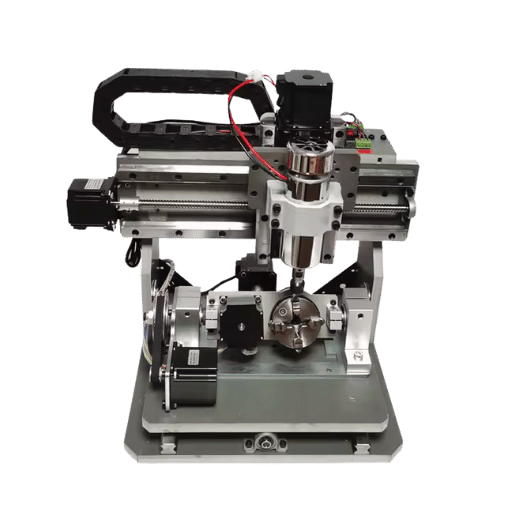
CNC Technology and Its Importance
Modern PCB milling needs CNC technology for cutting purposes. Key stuff is:
- High Precision: Translates digital circuit board designs into exact physical layouts
- Error Reduction: Minimizes human error and improves production consistency
- Complex Design Support: Enables creation of intricate designs difficult to achieve manually
- Workflow Automation: Reduces production time and increases efficiency
Size and Working Area Considerations
Factors to Make Decisions:
- PCB Size Requirements: The working area should accommodate a PCB of maximum dimensions.
- Fixture Space: Clamps and holding devices should also be taken into consideration.
- Application Scale: Primitive and miniature machines are used for prototyping, whereas industrially-sized PLC machines are used for production.
- Future Expansion: Think of the potential growth in project requirements.
Types of Milling Bits and Tools
Comparing PCB Milling with Other Fabrication Methods
PCB Milling vs. PCB Etching
Advantages of PCB Milling Over Traditional Methods
Key Advantages:
- Environmental Protection: Small production of chemical waste
- Lower Risk to Health: Lesser exposures to hazardous substances are preferable.
- Greater Versatility: Able to proceed with a variety of substrate materials
- Faster Turnaround: Prototyping can be quickly completed
- No Chemical Handling: Disposal of hazardous chemicals is eliminated
- Instant In-House Prototyping: Immediate fabrication of PCBs
- Chemical Handling: Disposal of hazardous chemicals is eliminated
- Short-Run: Small-scale batching
Cost Analysis: Milling vs. Outsourcing PCB Production
Maintenance Tips for Your PCB Milling Machine
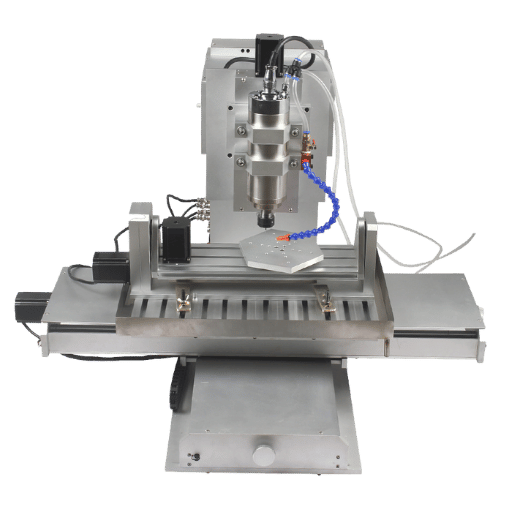
Routine Maintenance Practices
Essential Maintenance Checklist:
- Clean Regularly: Clean this machine of dust, debris, and residues after each use.
- Lubricate Moving Parts: Follow the recommended lubrication procedure to ensure smooth operation.
- Inspect Components: Carefully check the spindle, belts, and cutting tools for wear or damage.
- Calibrate Periodically: Test calibration and adjust the machine if necessary to preserve accuracy.
- Check Connections: Inspect all electrical and mechanical connections to ensure they are tight.
- Update Software: Ensure that the latest version of the firmware and control software are installed.
Common Issues and Troubleshooting
Emerging Trends in PCB Milling Technology
🚀 Progress in CNC Milling
The Par Excellence of the Modern CNC Milling Machine would have the fast spindle, multiple axes, and adaptive controls for better precision and efficacy.
🖥️ Desktop CNC Revolution
With machines that are now compact and affordable, PCB milling has become accessible to hobbyists, schools, and small workshops all over the world.
🤖 Smart Technology Integration
With the integration of AI, IoT, and automation, there will be enhancements of efficiency, reduction of errors, and data-driven manufacturing in real-time.
Frequently Asked Questions About PCB Milling Machines
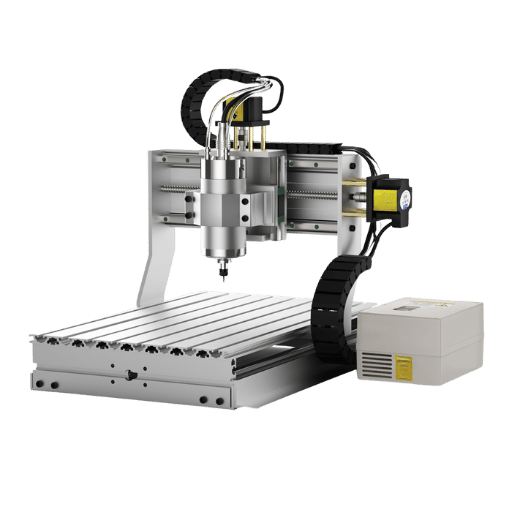
❓ What is the Best PCB Milling Machine for Beginners?
The Bantam Tools Desktop PCB Milling Machine is a great choice for beginners. It offers:
- An intuitive software interface
- Accurate milling capability
- Strong construction
- Guided tutorials for use by a layperson
- Purpose-designed for small-scale PCB prototyping
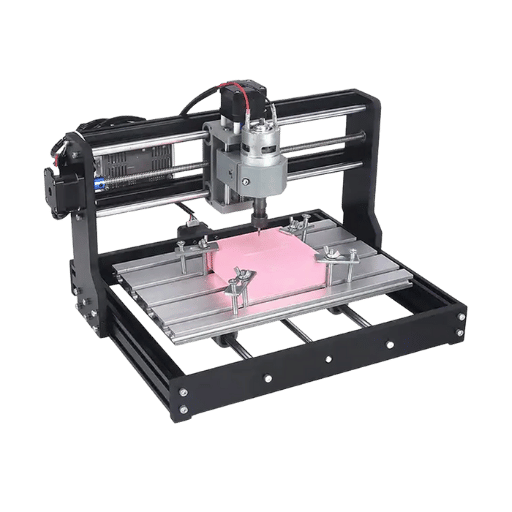
An affordable option can be had in the form of the Genmitsu CNC 3018-PRO Basic, which comes with very simple assembly.
🔧 How to Choose the Right Drill Bits for PCB Milling?
The selection factors that govern appropriate drill bit choice for PCB milling are:
- Selection of Diameter: Bits ought to be picked according to the via and hole size (usually from 0.2mm to 1.0mm)
- Material Quality: Care should be taken to procure carbide drill bits, as they combine durability with clean cuts
- Shank Compatibility: Your shank size must fit your CNC milling system
- Bit Condition: Sharpness and quality must be ensured, or when worn-down bits translate to less accuracy
- Coating Options: Consider using TiN or TiAlN-coated bits for longer life
🔄 Can You Use a PCB Milling Machine for Other Materials?
A PCB milling machine can be made to work with a variety of soft materials, such as:
- Plastics: Acrylic, ABS, other thermoplastics
- Soft Metals: Thin sheets of aluminum and copper-clad materials
- Composites: Fiberglass and other PCB substrates
- Wood: Thin wooden sheets for prototyping
Note: Always check machine specifications for spindle speed and material thickness limits! Otherwise, you might get your equipment damaged or waste your own materials.
⚙️ What is the Importance of Spindle Speed in PCB Milling?
Spindle speed (in RPM) determines the success in milling PCBs:
- Surface Quality: Higher speeds generally provide better surface finishing, with
- Burr Formation: Proper speed settings take care of reducing burrs.
- Tool Life: Incorrect speed settings lead to premature tool wear.
- Heat Management: Appropriate speeds minimize the heat that can damage cutting tools.
- Material Consideration: Certain speed ranges apply to different materials.
Tip: Manufacturer guidelines should be followed when selecting the speed, and then other factors,s such as material and required finish quality, ty must be considered for adjustments.
📄 What are Gerber Files and Why are They Important?
The industry-standard format for manufacturing images of PCBs is called Gerber files. The reasons they have gained so much fame are:
- Universal Compatibility: Recognized by all equipment used in PCB manufacturing
- Complete Information: is said to contain all the information about a PCB layout, including traces, pads, and layers
- Precision Mapping: Creates a “one-to-one” mapping from design to physical board
- Quality Assurance: Accurate Documentation will always eliminate errors in manufacturing
- Industry Standard: Most PCB manufacturers and milling machines require them
Key Statistics and Industry Insights
75%
Cost reduction for prototype development compared to outsourcing
90%
Reduction in time-to-market for new product development
95%
Decrease in chemical waste compared to traditional etching methods
24/7
On-demand manufacturing capability without external dependencies
Best Practices for PCB Milling Success
🎯 Professional Tips for Optimal Results
📐 Design Optimization
- Maintain a minimum thickness of 0.1mm traces.
- Choose vias of appropriate size for the drill bits
- Consider tool access for internal features
- If possible, optimize for single-sided milling
🔧 Machine Setup
- Ensure that workpieces are clamped tightly.
- Calibrate the machine before every session.
- Use proper cutting speeds for respective materials.
- Make sure that dust collection is handled properly.
⚠️ Safety Precautions
- Always wear your safety glasses and dust mask.
- Keep the work area clean and well-lit.
- Never leave the machine unattended during operation.
- Inspect tools on a regular basis for wear or damage.
🎨 Quality Control
- Test cut on sample material first
- Cut quality is monitored through the process
- Operation logs are kept with all details
- Inspection procedures are applied consistently
Industry Applications and Use Cases
🏭Industrial Manufacturing
Big manufacturers use PCB milling for rapid prototyping so that they can shorten the time in development and work faster on product iterations. The idea behind it is to check out the design before going into mass production.
🎓 Educational Institutions
Universities and technical schools use PCB milling machines so that students get some practical experience in electronics design and manufacturing, gearing them up for real-life industry issues.
🚀 Research and Development
R&D labs do experimental circuit designs and sensor development using these machines for their rapid iteration and testing cycles in cutting-edge electronic solutions.
✈️ Aerospace and Defense
The aerospace and defense application sectors benefit in critical cases for precision milling and manufacturing of specialized electronic components and systems.
Conclusion
The Future is Here
PCB milling machines mark a tidal wave of change in electronics prototyping and manufacturing. These machines, capable of giving essentially infinite control over the design-to-prototype process, serve engineers, educators, and innovators in bringing ideas to life faster and with much more efficiency.
Whether you are developing state-of-the-art consumer electronics, doing some research, or training the next generation of engineers, these PCB milling tools will keep you at the cutting edge in an ever-modernizing technological landscape.
Frequently Asked Questions (FAQs)
Q: Explain to me the milling process for PCBs.
A: Milling for PCBs is a machining operation consisting of several steps, including contour milling and tool replacement. First, the copper-clad board is fixed in the working area of the machine. The milling machine then mills away the copper from the areas where there is no corresponding solder mask, creating the desired traces and vias. Spindle speed and tool path play a huge role in ensuring high resolution.
Q: What are the benefits of a Bantam Tools desktop PCB mill?
A: The Bantam Tools desktop PCB mill has several benefits, namely ease of use, compact size, and the ability to handle various boards, including FR-4 and plastics. This machine is perfect for in-house production, thereby providing rapid prototyping and changes without outsourcing.
Q: What type/tool is generally used in PCB milling machines?
A: Common tools with PCB milling machines include end mills, drills, and CNC bits made from carbide. Selecting a tool depends on aspects related to the milling and drilling processes, which may be things like the thickness of the board material and the degree of precision desired in features such as vias and edge cuts.
Q: Why is spindle speed important?
A: The spindle speed, in revolutions per minute, is considered one of the most important parameters in PCB milling since it controls the cutting action and limits the destruction of the finished surface. Generally, increasing spindle speeds (rpm) gives better finishing and less burr formation, but improper adjustment could also lead to overheating of the cutting tool and tool wear.
Q: Are PCB milling services a possibility on CNC?
A: The different CNC machines can be utilized for PCB milling and vice versa. The hobbyist categories mostly choose 3018 CNC machines or advanced models with GRBL software on them to largely automate the milling process. The CNC machine permits complex PCB layouts and intricate designs.
Q: What are Gerber files, and why are they important for PCB milling?
A: Gerber files are a standard file format for describing printed circuit board images for manufacturing. Such files ensure that all information pertaining to PCB layout, including traces, pads, and solder mask layers, is duly incorporated therein. If Gerber files are accurate, the milling machine will make the intended circuit board design.
Q: Is PCB milling a labor-intensive activity?
A: In some cases, PCB milling could indeed prove labor-intensive, especially when performed manually or without automated systems. However, in modern times, with tool changers and state-of-the-art software packages, the manual efforts in PCB milling for small jobs and prototyping have significantly diminished.
Q: What are the kinds of materials used in PCB milling?
A: Some materials commonly used in PCB milling are copper-clad boards, usually FR-4, and any other suitable materials, such as plastic. The choice of the material will influence the milling process, in the choice of the tool used, and lastly in the final product quality; hence, one must make an appropriate choice with respect to the requirements of the PCB design.
📚 Additional Resources
For more detailed information on PCB milling technology and implementation:
- Short paper on a CNC-based PCB milling machine considering human safety
Read the paper here - Design and manufacturing of a PCB cutting machine
Read the paper here - Milling (machining)

