


Triphenylmethanol Melting Point and Its Chemical Properties
Understanding the physical and chemical characteristics of triphenylmethanol is a requirement for researchers and chemists for an array of applications. This thorough investigation is about its melting point, which is essential in determining purity and applicability in chemical reactions. We will see molecular structure, reactivity, and features that define the value of triphenylmethanol for use in organic chemistry.
Introduction to Triphenylmethanol
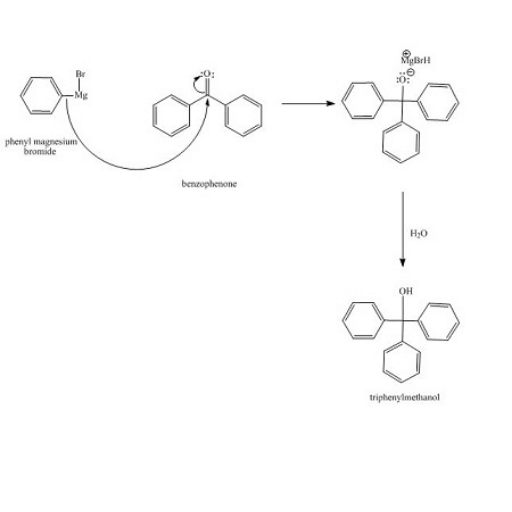
Triphenylmethanol is an organic compound with the formula (C₆H₅)₃COH. It is an aromatic alcohol; thus, it features three phenyl groups attached to a central carbon, which a hydroxyl group fills. It is a solid at ambient temperature with melting points usually between 162 and 165°C and is soluble in organic solvents like ether and benzene. The compound finds application in organic synthesis, commonly used as an intermediate or reactant, while its stability and unusual structure offer challenges for laboratory research and further academic studies.
What is Triphenylmethanol?
Key Characteristics
- Molecular Formula: C₁₉H₁₆O
- Class: Tertiary aromatic alcohol
- Physical State: At room temperature, a crystalline solid
- Melting Point: About 162–165°C
- Solubility: Slightly soluble in water, easily dissolved in organic solvents
If available from technical suppliers, triphenylmethanol is a crystalline solid in appearance at room temperature. In the mainstream definition of organic chemistry, it carries a variety of terminological connotations as a synthesis intermediate, a reactant for Grignard reactions, and a precursor to dyes and other functional organic compounds. It receives regular study by admission and industrial research because of its stability, well-defined character, and glassy appearance.
Chemical Structure and CAS Number
Molecular Details
SMILES: C(C1=CC=CC=C1)(C2=CC=CC=C2)(C3=CC=CC=C3)O
CAS Number: 76-84-6
Molar Mass: 260.33 g/mol
The CAS number for triphenylmethanol is 76-84-6, an identifier unique to this chemical in various chemical databases and data registries. This identifier is essential during chemical cataloging, regulatory compliance, and research activities in academic and commercial settings.
Applications in Organic Chemistry
Synthesis Applications
- Synthesis of alcohol derivatives
- Study of the Grignard reaction
- Protecting group for ketones
Research Applications
- Compound for stability tests
- Catalyst research
- Polymer chemistry studies
These applications underline the versatility and importance of triphenylmethanol in theoretical or applied organic chemistry.
Melting Point of Triphenylmethanol

Determining the Melting Point
Melting point range: 162–164°C
The measurement is performed with a calibrated melting point apparatus to be precise and reproducible, and the purity of the sample will greatly influence the observed melting range, with impurities producing either a broadening or a lowering of this range.
Comparative Analysis with Related Compounds
Triphenylmethanol melts at a much higher temperature compared to other aromatic alcohols like benzyl alcohol and phenol. The higher melting point is attributed to the bulkiness and rigidity of the molecule, in addition to the interfering van der Waals forces operating between the molecules. The three phenyl groups also add to the symmetry and thereby strengthen the lattice stability from a solid-state point of view.
Factors Affecting Melting Point
| Key Factor | Description |
|---|---|
| Structure | Symmetrical molecules pack efficiently, raising melting points |
| Forces | Stronger intermolecular forces (e.g., hydrogen bonds) increase melting points |
| Weight | Heavier molecules have higher melting points due to stronger van der Waals forces |
| Polarity | Polar molecules exhibit higher melting points via dipole-dipole interactions |
| Impurities | Impurities lower the melting points and broaden the range |
| Crystal Structure | Different crystal forms affect the melting point and stability |
Synthesis of Triphenylmethanol

Overview of Synthesis Methods
A Grignard reaction is frequently employed for the synthesis of triphenylmethanol. This involves the reaction of phenylmagnesium bromide, a Grignard reagent, with carbonyl-containing compounds such as benzophenone. The reaction takes place through the intermediate magnesium alkoxide, which is hydrolyzed by water or acid to finally give triphenylmethanol.
The Grignard Reaction in Triphenylmethanol Synthesis
Key Advantage: Being extremely efficient, the Grignard reaction generally gives high yields when carried out under carefully controlled conditions and, for this reason, finds wide application both at the industrial as well as at the laboratory level. Its importance stems from simplicity and reproducibility.
Step-by-Step Synthesis Procedure
1. Preparation of reagents
- Dry and inert atmosphere using nitrogen or argon
- Assemble all required reagents, including phenylmagnesium bromide, benzophenone, and anhydrous ether
2. Formation of the Magnesium Alkoxide Intermediate
- Dissolve benzophenone in anhydrous ether
- Phenylmagnesium bromide is added dropwise with constant stirring.
- Keep the reaction mixture cool and well-stirred.
3. Finishing the Reaction
- Allow the mixture to react thoroughly by stirring under controlled temperature.
- Check the reaction progress on thin-layer chromatography.
4. Hydrolysis of the Intermediate
- Add water or dilute acid dropwise with continuous stirring.
- This leads to the formation of triphenylmethanol and magnesium salts.
5. Product Isolation and Purification
- Extract the organic layer by using a separating funnel.
- Wash with distilled water or with a brine solution to remove any residual impurities.
- Concentrate by rotary evaporation and purify by recrystallization.
- Confirm the identity by melting point determination, ¹H NMR, and IR.
Chemical Properties of Triphenylmethanol

Physical Properties and Characteristics
Appearance
The solid crystal is white or slightly off-white.
Solubility
It is sparingly soluble in water and readily soluble in ethanol, acetone, and benzene.
Stability
It is stable under ordinary conditions, but it is sensitive to heat and strong acids.
Reactivity and Stability
Triphenylmethanol is stable under most conditions and shows reactivity in the presence of strong acids, which can catalyze either its dehydration or hydrolysis. Heat may well assist the decomposition of the compound. Under mild bases or oxidizing agents, the compound does not undergo any major transforming reactions and remains intact, save for the harsher chemical conditions.
Safety and Handling Precautions
⚠️ Safety Guidelines
- Always wear appropriate personal protective equipment (gloves, safety goggles, lab coat).
- Operate in a well-ventilated area or under a fume hood.
- Store in a cool, dry place away from direct sunlight.
- Keep away from incompatible substances like strong acids or bases.
- Dispose of waste in accordance with local regulations and institutional guidelines.
- Always consult the material safety data sheet (MSDS) for further details on safety measures.
Manufacturers and Market Insights

Leading Manufacturers of Triphenylmethanol
| Manufacturer | Specialization |
|---|---|
| Sigma-Aldrich | High-purity, research & industrial use |
| Thermo Fisher | Lab-grade, analytical & synthesis use |
| TCI America | R&D-focused, high-quality compounds |
| Alfa Aesar | Academic & industrial, purity focus |
| Xindao Biotech | Leading producer, diverse offerings |
| TNJ Chemical | China-based, factory & supplier |
Market Trends and Environmental Considerations
These dynamic shifts in the global chemical industry are being driven by technological increments and changing customer needs. There is a considerable surge in demand for chemical solutions guaranteed to be sustainable and environmental-friendly, representing greater interest in green chemical initiatives in various sectors. An additional remark is to say that there has been a steady increase in demand for high-purity compounds for research and development purposes, thereby acting synergistically with trends in pharmaceutical innovation and new material development.
Recent Studies and Advancements

Latest Research Findings
With increasing studies, evidence shows remarkable advances in solar technology and solar energy storage. Modern solar technologies, such as perovskite-based solar cells, are reaching record conversion rates, thus reducing prices and rendering solar energy more accessible to the public. Moreover, newer battery technologies, including solid-state lithium batteries, showcase improvements in energy density and safety.
Innovations in Synthesis Techniques
Current Innovation Focus Areas
- Better process design for efficiency and scalability in synthesis
- Catalytic processes that minimize energy requirements whilst maximizing yields
- Use of renewable feedstocks to lessen dependence on non-renewable sources
- Use of machine learning algorithms in optimizing reaction conditions
- Build better processes that are cost-effective and environmentally friendly
Future Directions in Triphenylmethanol Research
Future research on triphenylmethanol will focus mostly on improving synthetic routes to increase efficiency and sustain the product. Research is going on on greener methods, including catalytic systems and renewable starting materials, to reduce any damage to the environment. Further, research is ongoing regarding potential applications in the pharmaceutical and materials science sectors, particularly in drug development and polymer synthesis.
Frequently Asked Questions (FAQs)
Q: What is the melting point of triphenylmethanol?
A: Being a very famous chemical entity with CAS number 76-84-6, it melts within the range of about 162-163°C. Triphenylmethanol is a white crystalline solid with an intrinsically stable structure and thus is often used in various chemical syntheses.
Q: What are the physical properties of triphenylmethanol?
A: With the chemical formula C₁₉H₁₆O and a molecular weight of 260.33 g/mol, it exists as a white crystalline solid and is slightly soluble in water but very soluble in organic solvents such as methanol and petroleum ether.
Q: How does one prepare triphenylmethanol?
A: It forms when phenylmagnesium bromide reacts under acid conditions with benzophenone, ensuring the presence of the hydroxyl group on triphenylmethyl.
Q: What are the safety measures regarding triphenylmethanol?
A: While conditions allowing irritancy to be manifested, precautionary measures such as wearing gloves and protective goggles should be taken. The substance must be kept in a cool, dry place away from incompatible materials.
Q: What are some research lab uses for triphenylmethanol?
A: Triphenylmethanol is primarily used in research laboratories as a reagent for the synthesis of other organic compounds, including triarylmethane dyes. Owing to its stabile nature and solubility in various solvents, it plays a pivotal role in a large number of experimental procedures.
Reference Sources
- West Liberty University represents triphenylmethanol melting point values around 160 – 163°C, which corresponds to 320 – 325°F.
Source link. - Harper College revealed, from a safety data sheet, the melting point variation of triphenylmethanol, which is 160-163°C (320-325°F).
Link to source - Brazosport College: Under the risk and safety data section of the material safety data sheet, the melting point range for triphenylmethanol was reported as 160 – 164°C (320 – 327.2°F).
SOURCE LINK.
Researchers, students, and organic chemistry professionals will require detailed information about triphenylmethanol and its melting point, chemical constitution, properties, etc.

